How Texas Hold'em App Functionalities Relate to Tournament Advancement Patterns
Nils Butler · Oct 1, 2026
How Texas Hold'em App Functionalities Relate to Tournament Advancement Patterns
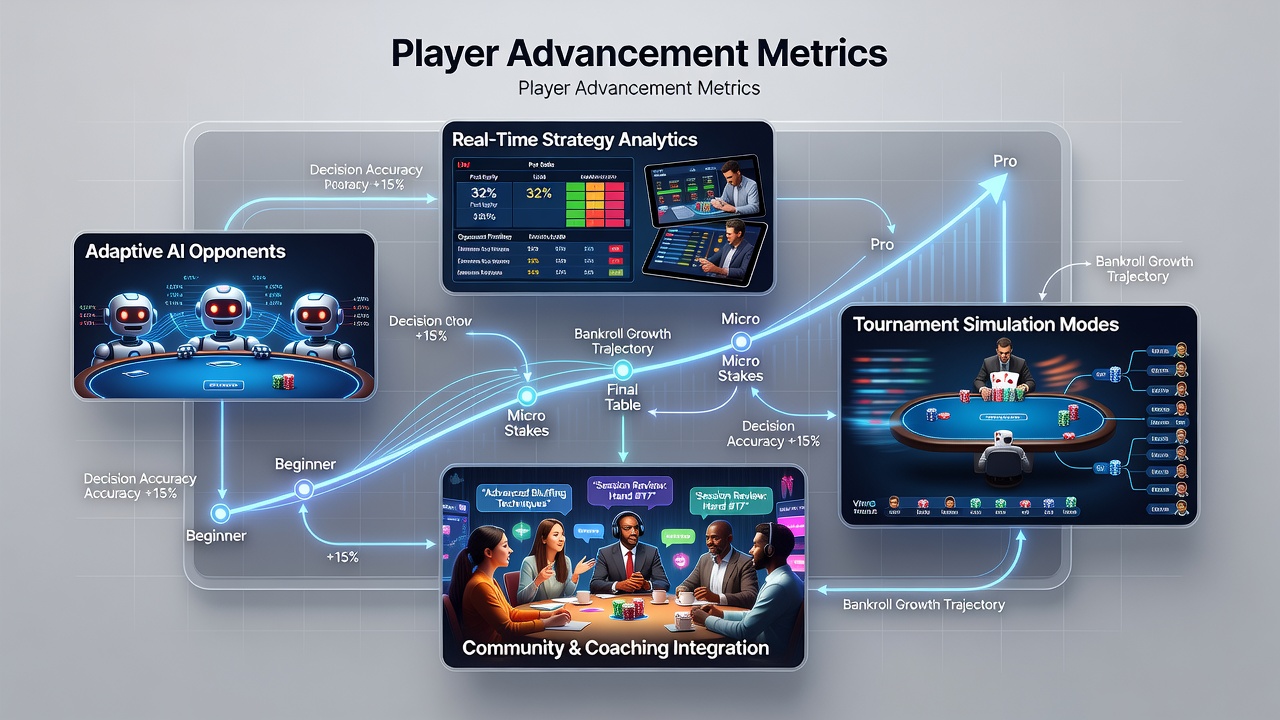
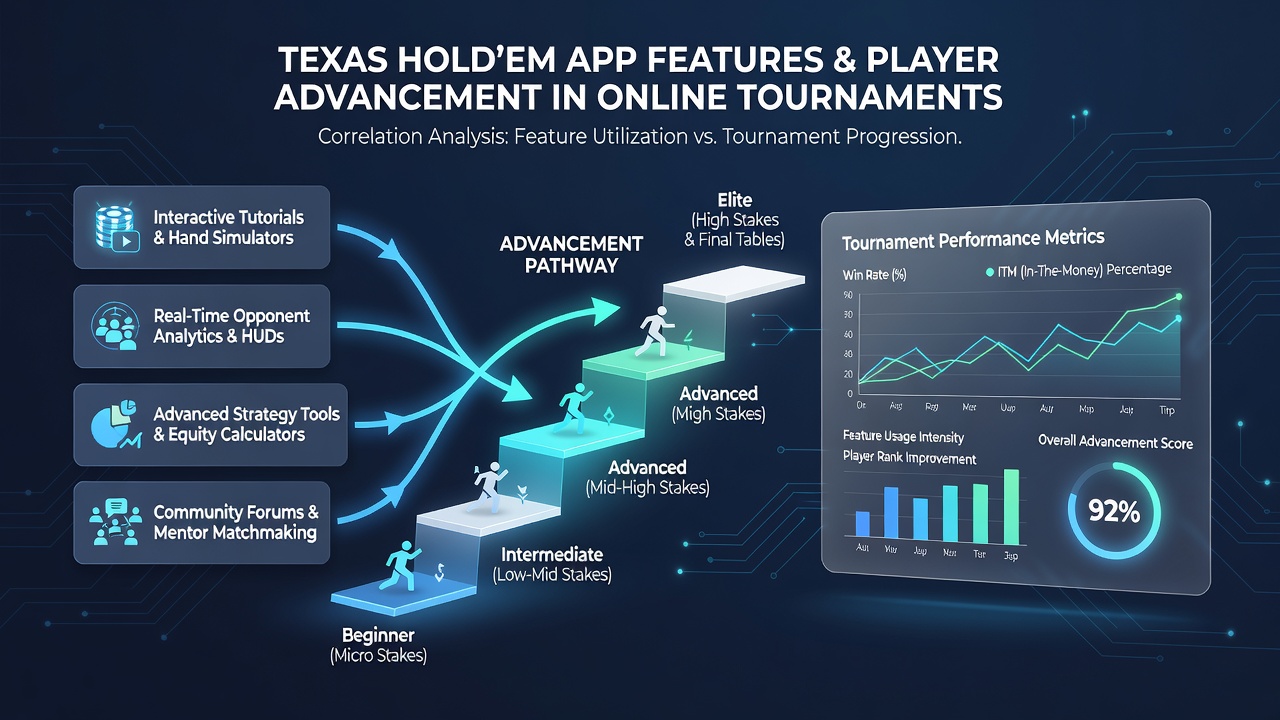
Texas Hold'em applications incorporate a range of tools that track player interactions during online tournaments, and platform data shows measurable links between feature usage and progression through bracket stages. Players who engage with built-in hand analysis modules reach final tables at higher frequencies according to aggregated reports from multiple operators. These applications often include real-time equity calculators alongside session logs, which allow participants to review decisions immediately after each hand concludes.
Interface Design and Navigation Efficiency
Application layouts that prioritize quick access to betting controls and stack size displays correlate with faster decision-making under time constraints, while users who navigate multi-table setups through streamlined menus maintain higher survival rates into later rounds. Studies from research institutions indicate that intuitive menu structures reduce errors during high-pressure moments on the bubble, and this pattern appears consistent across devices with varying screen dimensions. Observers note that apps providing customizable hotkeys for common actions see increased engagement from regulars who advance through multiple events per week.
Analytics Tools and Performance Tracking
Integrated statistics panels that display opponent tendencies over previous hands provide data points that players reference during active play, and records from October 2026 events reveal that participants who activate these overlays advance further than those relying solely on basic views. Features such as HUD overlays and post-hand breakdowns enable pattern recognition that supports adjustments in strategy across different stack depths. Researchers discovered that applications offering exportable hand histories to external analysis software show stronger correlations with sustained performance in series-long leaderboards.
Notification Systems and Tournament Scheduling
Push alerts for upcoming satellites and late-registration windows help users time their entries with greater precision, whereas platforms that integrate calendar syncing report elevated participation rates leading into major October 2026 festivals. Those who respond to automated reminders about starting stacks or payout structures often secure positions before fields swell, which data indicates improves average finishing positions. Apps that combine these alerts with personalized bankroll tracking maintain higher retention through multi-day events because users receive updates on remaining time and required actions without leaving the main screen.
Training Modules and Skill Development Pathways
Built-in simulation environments that mirror current tournament conditions allow repeated practice of specific scenarios, and figures from industry reports link frequent use of these modules to improved qualification rates from freerolls into paid events. Applications that adapt difficulty levels based on user performance history demonstrate stronger associations with long-term advancement than static tutorial sections. Players who complete progressive challenges within the app environment accumulate experience points that unlock advanced filters, creating a feedback loop where continued engagement aligns with measurable movement up tournament leaderboards.
Community and Social Integration Features
Chat functions and shared strategy forums embedded within the application enable real-time discussion of table dynamics, while records indicate that users who participate in these channels during breaks between hands adjust more effectively to shifting table compositions. Platforms that surface leaderboards and head-to-head comparisons foster competitive benchmarks that correlate with consistent re-entry patterns among advancing players. Data from regulatory bodies such as the Nevada Gaming Control Board highlights how social connectivity tools contribute to extended session lengths that precede deeper runs in large-field events.
Cross-Device Synchronization and Accessibility
Seamless handoff between mobile and desktop versions preserves active session data without interruption, and this continuity supports participants who switch devices mid-tournament to maintain focus during critical stages. Applications supporting offline review of past hands while on the go show elevated usage among those who qualify for final tables across multiple time zones. Observers note that accessibility options including adjustable font sizes and color contrast settings broaden participation, which broadens the pool of players reaching advanced stages according to platform metrics.
Conclusion
Texas Hold'em applications that combine analytical depth with responsive interfaces demonstrate consistent associations with higher advancement metrics in online tournament environments. Platform records from October 2026 illustrate how features ranging from notification timing to training simulations align with progression through successive elimination stages. Regulatory sources including the Alcohol and Gaming Commission of Ontario provide additional context on usage patterns that reinforce these observed relationships across diverse player bases.